Calorie Deficit Calculator: How to Calculate Your Deficit for Weight Loss
Your Results:
In today’s fast-paced world, managing weight effectively requires the right tools and knowledge. The calorie deficit calculator UK is a powerful online tool that helps you achieve sustainable fat loss by calculating your ideal calorie deficit. Whether you’re a beginner or fitness enthusiast, this guide will teach you how to use it for maximum results. And the best part? It’s a free calorie deficit calculator you can use anytime, anywhere.
Understanding the Calorie Deficit Calculator
The Basics: Before using the calorie deficit calculator in the UK, it is essential to understand what a calorie calculator is and how it works. In simple words, you’re in a calorie deficit when you eat less than your body needs to maintain your current weight. Over time, this shortfall forces your body to use stored fat for energy, leading to weight loss.
Suppose it’s like a budget. If you spend less than you earn, you save money. Similarly, if you eat less than your body burns, you lose weight. On the other hand, overeating leads to fat gain. To lose weight, you must burn more calories than you consume. The free Calorie Deficit Calculator can help you stay on track.
How to Use the Calorie Deficit Calculator: A Step-by-Step Guide
The James Smith Calorie Deficit Calculator is easy to use. To get recommendations from the James Smith Calorie Deficit Calculator, follow these steps:
Step 1: Enter Personal Details
Users must provide their age, gender, height, weight, and activity level accurately. Correct data ensures more precise calorie and deficit calculations.
Step 2: Basal Metabolic Rate (BMR) calculation
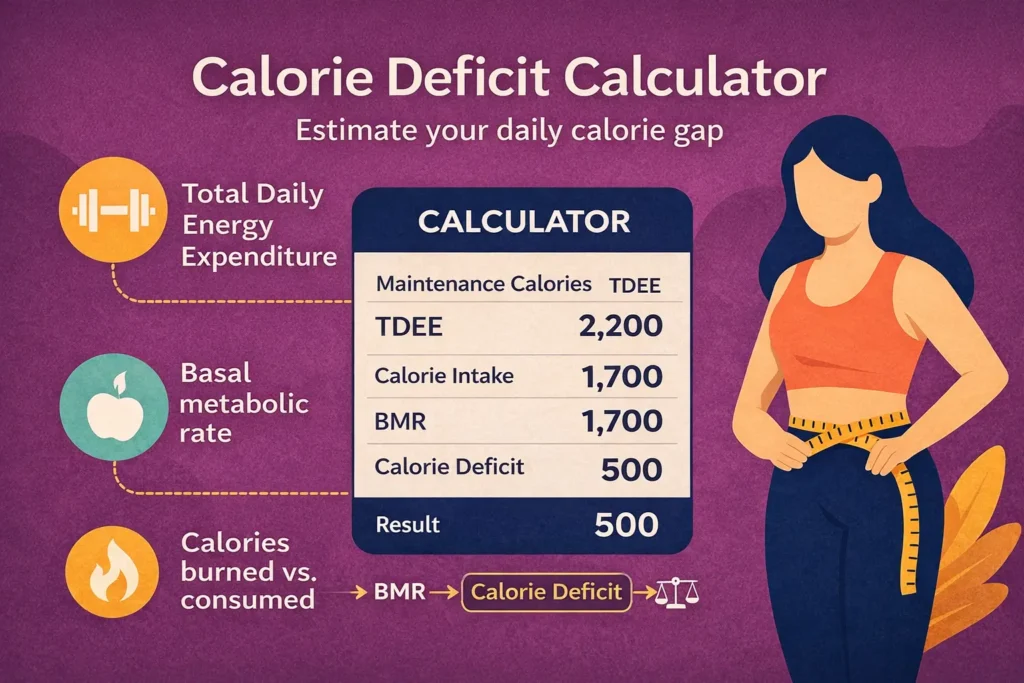
The calculator estimates your Basal Metabolic Rate (BMR). This is the number of calories your body needs at rest to support essential functions.
Step 3: Total Daily Energy Expenditure (TDEE)
The calculator estimates your Total Daily Energy Expenditure (TDEE) based on your activity level. It shows how many calories you burn each day.
Step 4: Calorie deficit recommendation
After calculating TDEE, the calculator suggests an appropriate daily calorie deficit. A deficit of 500–1,000 calories per day is a standard approach for achieving sustainable weight loss.
Step 5: Check and adjust.
Users can check the calculator regularly. This helps them review their calorie needs. They can adjust targets if their weight or activity level changes.
Features of the Calorie Deficit Calculator
The goal of the Calorie Deficit Calculator is to make calorie counting easier. It gives personalized calorie recommendations. Your body type and activity level determine your personalized calorie recommendations. The calculator can estimate your daily calorie needs. It can also help you set a calculated calorie deficit for weight loss. In a world of junk food and quick fixes, you should know your body’s needs. Understanding your body’s needs can significantly impact both your short-term success and long-term health. The best calorie deficit calculator uses science, not fantasy. It will increase your chances of weight loss.
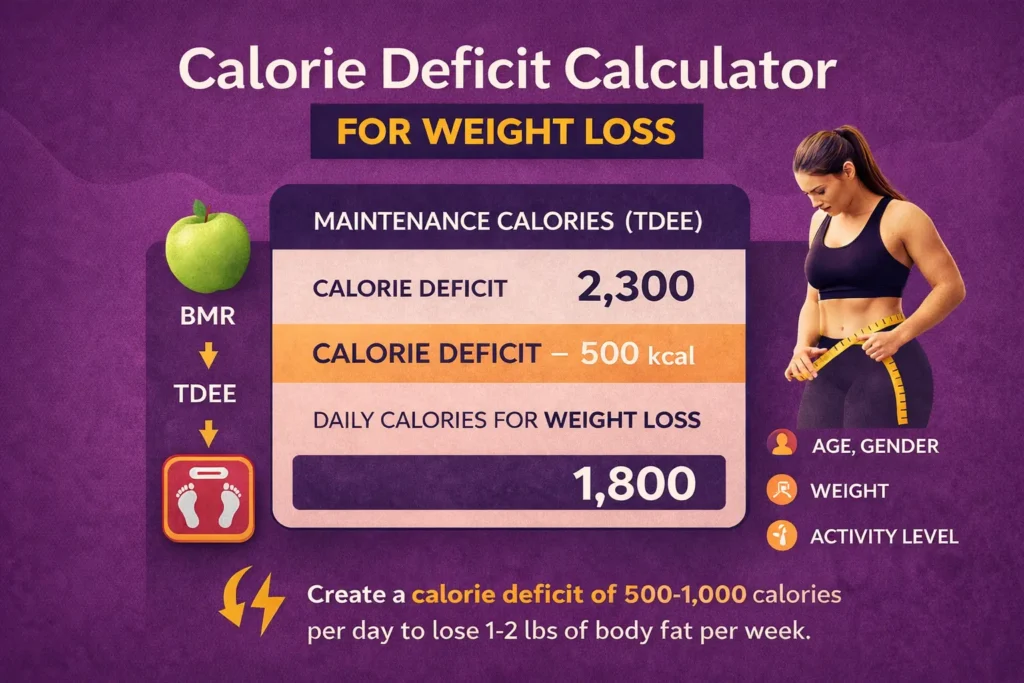
For instance, to maintain her weight, a 30-year-old woman who weighs 180 pounds and leads an active lifestyle would require about 2000 calories per day. For safe weight loss, a 500-calorie deficit would require a daily intake of 1000 calories.
Calorie Deficit Calculator for Weight Loss
The weight-loss calorie deficit calculator is designed to help you reach your weight-loss goals in a controlled and safe way. The James Smith Calorie Deficit Calculator lets you create a calorie deficit as well as understand how many calories you need to eat to maintain your current weight. This deficiency is the foundation of weight loss. To put it simply, a calorie deficit happens when you take in fewer calories than your body requires to function.
To lose weight, it is generally advised to create a daily calorie deficit of 500 to 1,000, which can lead to a weekly fat loss of 1 to 2 pounds. Compared to severe measures, this strategy is more durable, progressive, and healthful. Using your personal information (age, weight, height, gender, and activity level), the calorie deficit calculator helps you set a reasonable, safe calorie target without depriving your body of vital nutrients.
How can you calculate your TDEE based on your activity level?
The TDEE multiplier is the term used to describe this figure. Your multiplier increases as you become more active. It also means your body burns more calories each day. To determine your activity level and the associated multiplier, use the table below.
Example Table:
| Activity Level | TDEE Multiplier |
| Sedentary (little or no exercise) | 1.2 |
| Lightly active (light exercise/sports 1–3 days/week) | 1.375 |
| Moderately active (moderate exercise/sports 3–5 days/week) | 1.55 |
| Very active (hard exercise/sports 6–7 days/week) | 1.725 |
| Extra active (very hard exercise/physical job) | 1.9 |
The Science Behind a Calorie Deficit Calculator.
To lose weight, you must know how to calculate a calorie deficit. When your body doesn’t get enough calories from food, it uses stored fat as energy. During lipolysis, your body breaks down fat. It uses the power from the resulting glycerol and fatty acids. Your body will go into “starvation mode.” It will slow your metabolism to conserve energy. They can make it harder to lose weight or cause muscle weakness. The James Smith Calculator can help. It provides a safety net, ensuring that you do not harm your health if you lose weight.
Here are the top benefits of using the Calorie Deficit Calculator.
The Calorie Deficit Calculator is a useful weight-loss tool. It has these advantages:
Customizable: The calculator recommends options tailored to your body and lifestyle. Therefore, the guide is both useful and practical.
The calculator provides daily calorie estimates, enabling users to make informed dietary and exercise decisions. Refrain from relying on generic recommendations.
Holistic Weight Management: The calculator stresses a balanced approach to weight management. It should include a balanced diet and regular exercise, rather than calorie restriction. This holistic view supports long-term weight management.
Track Progress: Use the calculator to check your progress. Adjust your calorie deficit calculator, James Smith, as needed. Your training and weight-loss goals depend on your ability to change.
Enhancing the calculator’s efficiency is crucial.
Consider a few key points to get the most from the calorie deficit calculator, James Smith:
Your dynamism affects the truth: Accurate TDEE computation depends on a thorough assessment of your activity. If you overestimate your workout, it may hinder your progress. It may create a smaller calorie deficit than planned.
For optimal results, combine the calculator with regular exercise, balanced nutrition, and adequate rest.
To ensure sustainable weight loss, avoid excessive calorie deficits and adopt gradual, manageable changes.
Common Mistakes and How to Avoid Them
Even with the free calorie deficit calculator, users can make mistakes. Avoid the following:
Sudden Dieting: A drastic calorie cut is a quick way to lose weight. However, it can also lead to sluggish digestion, vitamin deficiencies, and muscle loss. The James Smith Calculator can help you avoid the risks of crash dieting. It does this by using an improved method.
Ignoring Non-Dietary Elements: Diet alone won’t help you lose weight. Rest, hydration, and stretching are all imperative. Please ensure that your general plan addresses these issues.
Anxiety: Losing weight takes time. If you do not get things right, you can easily lose trust. Regularly review calorie needs and adjust targets as required.
Common Mistakes to Avoid When Creating a Calorie Deficit
Even with a powerful tool like the Calorie Deficit Calculator, mistakes can still happen. Here are some common ones:
Creating too large a calorie deficit: Going too low can slow your metabolism and cause muscle loss.
Ignoring protein intake: Protein is essential for preserving muscle while losing fat.
Not tracking progress: Without tracking, it’s hard to know what’s working.
Skipping resistance training: Cardio helps, but lifting weights keeps your muscles strong.
Expecting quick results: Fat loss takes time—patience is key.
FAQS
Q: What is a calorie deficit?
A calorie deficit occurs when daily calorie intake is less than daily energy expenditure, leading to fat loss.
Q: How to calculate TDEE?
Multiply BMR by an activity level factor to estimate total daily energy expenditure.
Q: How to use the calorie deficit calculator?
Enter age, gender, height, weight, and activity level. The calculator estimates daily calorie needs and suggests a safe deficit.
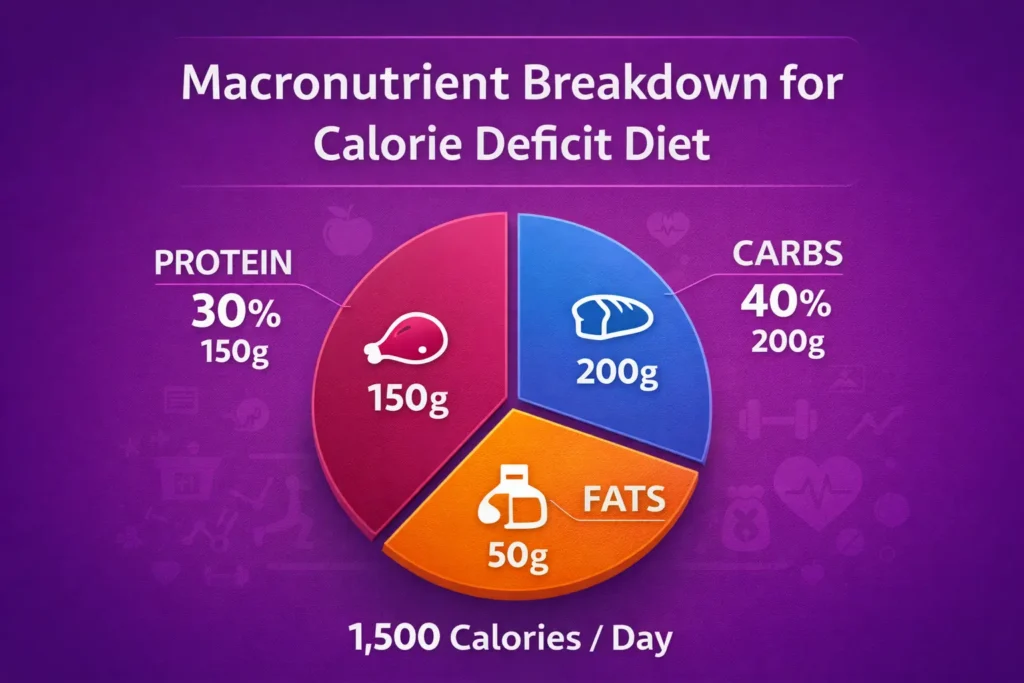
Q: Is a 500 kcal/day deficit safe?
Yes, it is generally safe and leads to gradual, sustainable fat loss.
In conclusion,
The Calorie Deficit Calculator can be a valuable partner on your weight-loss journey, not just a tool. It provides you with the information and control to make informed choices and manage your health. It offers personalized, science-backed insights into your calorie needs. The calculator shows the path to reach your targets. It works for beginners or those trying to improve their plans. Remember, losing weight doesn’t require special methods or quick fixes. Know your body. Change for the better. Stay committed to your goals. You have a tool to navigate this journey: the James Smith Calorie Deficit Calculator. It operates with precision and consistency.