Protein Calculator for Weight Loss: Find Your Personalized Protein Goal
Losing weight is not just about eating less — it’s about eating smart.
One of the big mistakes people make is ignoring protein. They cut calories, lose weight… but also lose muscle. And that’s where things go wrong.
Protein is the nutrient that keeps you full, protects your muscles, and helps your body burn fat more efficiently.
But here’s the real question:
How much protein do you actually need for weight loss?
That’s precisely where a protein calculator for weight loss becomes useful. It helps you figure out your daily protein intake based on your body and lifestyle — not guesswork. This guide will help you understand your daily protein intake for weight loss and how to calculate it accurately. If you’re planning to lose weight effectively, it’s important to understand your overall calorie intake along with protein consumption. You can calculate your daily needs using our calorie calculator.
Protein Calculator
The Protein Calculator can help you figure out how much protein an adult needs to keep healthy each day. People who work out a lot, kids, and women who are pregnant or breastfeeding may require additional protein. If you have kidney or liver difficulties, diabetes, or other health issues where protein levels are important, it can also be good to keep track of how much protein you eat.
Enter your details
Settings · BMR Formula & Body Fat
The formula affects calorie estimates for AMDR-based protein ranges. For Katch–McArdle, provide body fat %.
What Is Protein and Why Is It Important for Fat Loss?
Protein is one of the three essential nutrients your body needs, along with carbohydrates and fats. According to the Harvard T.H. Chan School of Public Health, protein plays a key role in weight management and muscle maintenance.
For weight loss, protein is like a secret weapon:
- Keeps you full longer (reduces cravings)
- Preserves muscles while dieting
- Increases calorie burn during digestion
This means you don’t just lose weight — you lose fat while keeping your muscles strong.
How Much Protein Do You Need to Lose Weight?
There is no universal answer_ it depends on: Your daily protein requirement for weight loss depends on these factors.
- Body weight
- Activity level
- Fitness goal
Recommended intake:
- 0.8 g/kg → Minimum (Basic Health)
- 1.2–1.6 g/kg → Ideal for weight loss
- 1.6–2.2 g/kg → Fat loss + muscle retention
Use our protein calculator for weight loss to get your exact target.
Factors That Affect Your Protein Needs
- Activity Level: Active people need more protein for muscle recovery.
- Body Fat Percentage: Lighter individuals may need more protein.
- Age: Older adults need more protein to prevent muscle loss.
- Diet Type: Vegetarians or vegans may need higher intake due to lower absorption.
Benefits of Using a Protein Calculator for Weight Loss
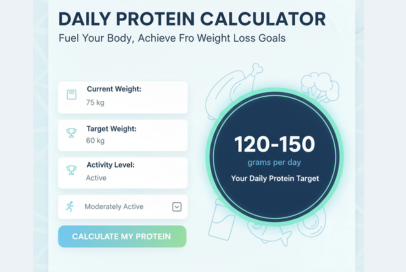
A protein calculator for weight loss or muscle gain helps you find out how much protein you need each day. It uses your body weight, activity level, and fitness goal to make this estimate. This takes the guesswork out of your diet and helps you stay on track.
The most common formula is:
Protein (grams) = Body weight (kg) × Protein factor
Protein factor based on activity level
- Sedentary lifestyle → 1.2 g/kg
- Moderate activity → 1.6 g/kg
- High activity/athletes → 2.0–2.2 g/kg
Example Calculation for Weight Loss
| Parameter | Value |
| Weight | 75 kg |
| Activity Level | Moderate (gym 3–4x/week) |
| Protein Factor | 1.6 |
Calculation: 75 × 1.6 = 120 g protein/day
This ensures fat loss while preserving lean muscle mass. Using a protein calculator UK tool or any online protein intake calculator can make this process fast and accurate.
Protein Requirements for Weight Loss Based on Activity Level and Body Type
Your protein needs vary depending on your activity level and fitness goal.
Active vs. Sedentary People:
- Sedentary (little/no exercise): ~1.2 g/kg
- Moderately active (mild gym workouts, walking): 1.4–1.6 g/kg
- Highly active (athletes, bodybuilders): 2.0–2.2 g/kg
Protein for Losing Fat vs. Keeping Muscle:
- Fat loss only: Aim for 25–30% of your total calories from protein.
- Fat loss + muscle retention: Target the higher end of 2.0–2.2 g/kg.
Using a protein calculator for muscle gain or weight loss can make tracking your daily protein intake easier and more accurate.
Protein Intake Based on Activity Level
| Activity Level | Protein (g per kg of body weight) | Example (70 kg person) |
| Sedentary | 1.2 g/kg | 84 g/day |
| Light | 1.4–1.6 g/kg | 98–112 g/day |
| Moderate | 1.6–1.8 g/kg | 112–126 g/day |
| Heavy | 2.0–2.2 g/kg | 140–154 g/day |
The amount of protein you eat is based on your age and gender.
Your age and gender also affect how much protein you need. For instance, women of the same weight usually need slightly less protein than men, while older adults need more to keep their muscle mass.
Men and Women
Men normally need more protein because they have more lean body mass.
Women who are trying to lose weight should nevertheless eat enough protein to be full and have energy.
What Older Adults Need in Protein
To slow down muscle loss (sarcopenia), those over 50 should eat 1.5–1.8 g/kg.
Recommended Protein by Age & Gender
| Age Group | Women (grams/day) | Men (grams/day) |
| 18–30 years | 60–90 g | 75–110 g |
| 31–50 years | 65–95 g | 80–120 g |
| 51–70 years | 70–100 g | 90–130 g |
| 70+ years | 75–105 g | 95–135 g |
Why Protein Helps You Lose Weight
Protein is the secret weapon for losing weight since it helps you eat less without feeling hungry.
Protein and a faster metabolism: The thermic effect of food (TEF) burns 20–30% of the calories in protein but only 5–10% of the calories in carbs.
Controlling hunger and feeling full: High-protein diets lower the hunger hormone ghrelin and raise the satiety hormones that keep cravings at bay.
Keeping Your Muscles While Dieting: When you don’t eat enough calories, you can lose muscle. Getting enough protein will help you shed fat, not muscle.
The Best Protein Sources for Losing Weight
Here are some of the best sources of protein to include in your diet for weight loss:
Lean Animal Proteins:
- Chicken breast (31g protein, 165 calories per 100g)
- Turkey breast (29g protein, 160 calories per 100g)
- Shrimp (24g protein, 99 calories per 100g)
Protein Sources from Plants
- Chickpeas (9g protein, 116 calories per 100g)
- Tofu (8g protein, 76 calories per 100g)
- Quinoa (4g protein, 120 calories per 100g)
High-Protein, Low-Calorie Foods
| Food (100g) | Protein (g) | Calories |
| Chicken breast | 31g | 165 |
| Turkey breast | 29g | 160 |
| White fish (cod) | 20g | 90 |
| Shrimp | 24g | 99 |
| Greek yogurt (non-fat) | 10g | 59 |
| Lentils (cooked) | 9g | 116 |
| Tofu | 8g | 76 |
| Quinoa (cooked) | 4g | 120 |
Complete and Incomplete: An Explanation
Proteins can be complete (having all nine essential amino acids) or incomplete (missing one or more).
What Are Complete Proteins and Why Are They Important?
Complete proteins are better at helping muscles heal and lose fat.
Smart Ways to Mix Incomplete Proteins
Vegans can mix foods to get a full protein:
- Beans with Rice,
- Hummus and Pita
- Whole-grain bread and peanut butter
Protein Supplements: Should You Use Them?
If you struggle to meet your daily target through food, supplements can help. This is where many people rely on a protein intake calculator to balance their diet and supplement intake correctly.
Protein Powders, Shakes, and Bars
- Whey protein is fast-digesting, great post-workout.
- Casein protein slow-digesting, good before sleep.
- Plant-based protein powders, such as soy, pea, or hemp, are available for vegans.
When Supplements Make Sense
- Busy lifestyle with little time for cooking
- After workouts for fast recovery.
- For vegetarians/vegans with limited protein sources
Protein Mistakes That Stop Weight Loss
Even with a protein calculator, people often make mistakes.
- Eating too little protein leads to muscle loss and hunger.
- Eating too much protein can lead to extra calories that can stall fat loss.
- Ignoring timing: Spreading protein throughout the day is better than eating it all at once.
Timing Your Protein for Maximum Fat Loss
When you eat, protein matters.
- Breakfast keeps you full longer and prevents snacking.
- Pre-workout: Fuels your muscles.
- Post-workout: Helps muscle recovery.
- Before bed: Casein protein prevents overnight muscle breakdown.
Practical Tips for Reaching Your Daily Protein Goal
Eating 120–150 g of protein daily might seem tough, but with smart planning, it’s simple to do.
Easy High-Protein Snacks
- Hard-boiled eggs
- Protein shakes
- Cottage cheese with berries
- Roasted chickpeas
Meal Planning for Weight Loss
Plan meals with a protein-first approach (choose your protein source first, then add veggies and carbs).
Sample One-Day High-Protein Meal Plan (150 g Protein)
| Meal | Food Items | Protein (g) |
| Breakfast | 3 eggs + ½ cup egg whites + spinach | 32g |
| Snack | Whey protein shake + 1 banana | 28g |
| Lunch | Grilled chicken (150 g) + quinoa + salad | 40g |
| Snack | Greek yogurt (200 g) + almonds (20 g) | 20g |
| Dinner | Salmon (150 g) + steamed broccoli | 30g |
Protein Calculator for Special Conditions
Some groups need special protein adjustments:
- Overweight beginners: start with 1.5 g/kg to avoid excess calories.
- Women with PCOS: higher protein helps control insulin.
- Diabetics: protein stabilizes blood sugar.
- Elderly: higher protein prevents muscle loss.
Frequently Asked Questions
Q: How do I calculate my daily protein intake?
A simple formula is:
Protein (g) = body weight (kg) × 1.2–2.2, depending on your activity level.
Q: How much protein does a 70 kg person need?
A 70 kg person usually requires 84–154 g of protein per day, depending on activity. Sedentary: ~84 g, Active: 100–112 g, Very active/muscle gain: 140–154 g.
Q: What is the 3-3-3 rule for weight loss?
Eat 3 balanced meals, drink plenty of water, and stay active every day. Adding enough protein improves results.
Q: Is a protein calculator in the UK different from other calculators?
No, it works the same way. The UK version uses metric units (kg, cm) for easier calculation.
Q: Which fruit is good for weight loss?
Fruits that are low in calories and high in fiber are best for weight loss. Good options include apples, berries, grapefruit, and watermelon. These fruits help you feel full. They reduce cravings and support a healthy diet. Pair them with enough protein for the best results.
Conclusion
A protein calculator for weight loss is a powerful tool to help you find your daily protein goal and stay on track. Using a protein calculator UK-based or not—will give you a tailored protein target. This target takes your body and lifestyle into account.
Remember:
- Aim for 1.2–2.2 g of protein per kg of body weight.
- Choose lean protein sources for fewer calories.
- Spread protein throughout the day for better results
Follow these steps to achieve effective fat loss. You’ll also keep muscle and boost your health. Keeping track of your daily protein intake can boost your weight loss success.